The Third Gender Community: Untold Stories of Neglect, Discrimination, Love, and Humanity
My Journey with the Hijra Community Since 2015: Personal Experiences, Untold Stories, and Questions for Society
Those We Push Away Have Hearts Too
One of the most neglected, marginalized, and disadvantaged communities in our society is the third gender community, commonly known in Bangladesh as the Hijra community.
Many people judge them by their behavior, appearance, and way of life. They assume that Hijra individuals lead disorderly, aggressive, or undisciplined lives. Some people fear them, avoid them, or even look at them with hatred.
But have we ever tried to understand their lives?
Have we ever asked ourselves how much pain, love, hope, and disappointment they carry within their hearts?
Have we considered that the people we sometimes avoid may also dream of a beautiful family? That they, too, may wish to spend their entire lives holding the hand of someone they love?
Since 2015, I have maintained close personal and family relationships with members of the Hijra community. Throughout this journey, I have had the opportunity to observe their lives closely, understand their struggles, and share their happiness and sorrow.
I regularly received invitations to their social and family gatherings. I participated in their celebrations and special occasions.
Whenever someone invited me to a wedding, I would sometimes bring a few members of the Hijra community along with me.
Interestingly, the hosts often did not even realize that the people accompanying me belonged to the Hijra community.
These experiences strengthened an important realization within me:
A person's true identity is not defined by physical appearance but by character, humanity, compassion, and the ability to love.
My initial affection for these individuals gradually developed into deeper understanding, personal attachment, and a sense of social responsibility.
This connection inspired me to begin working on their living conditions, employment opportunities, social dignity, and various challenges.
My Social and Humanitarian Activities Since 2015
Whenever my family organized a social or family event, I made an effort to invite members of the Hijra community from Mirpur.
I wanted them to feel included rather than isolated or neglected.
I wanted them to participate in family celebrations and experience the same joy and acceptance that other members of society enjoy.
Over the years, I have undertaken several initiatives to help them become financially independent.
Some of my notable activities include:
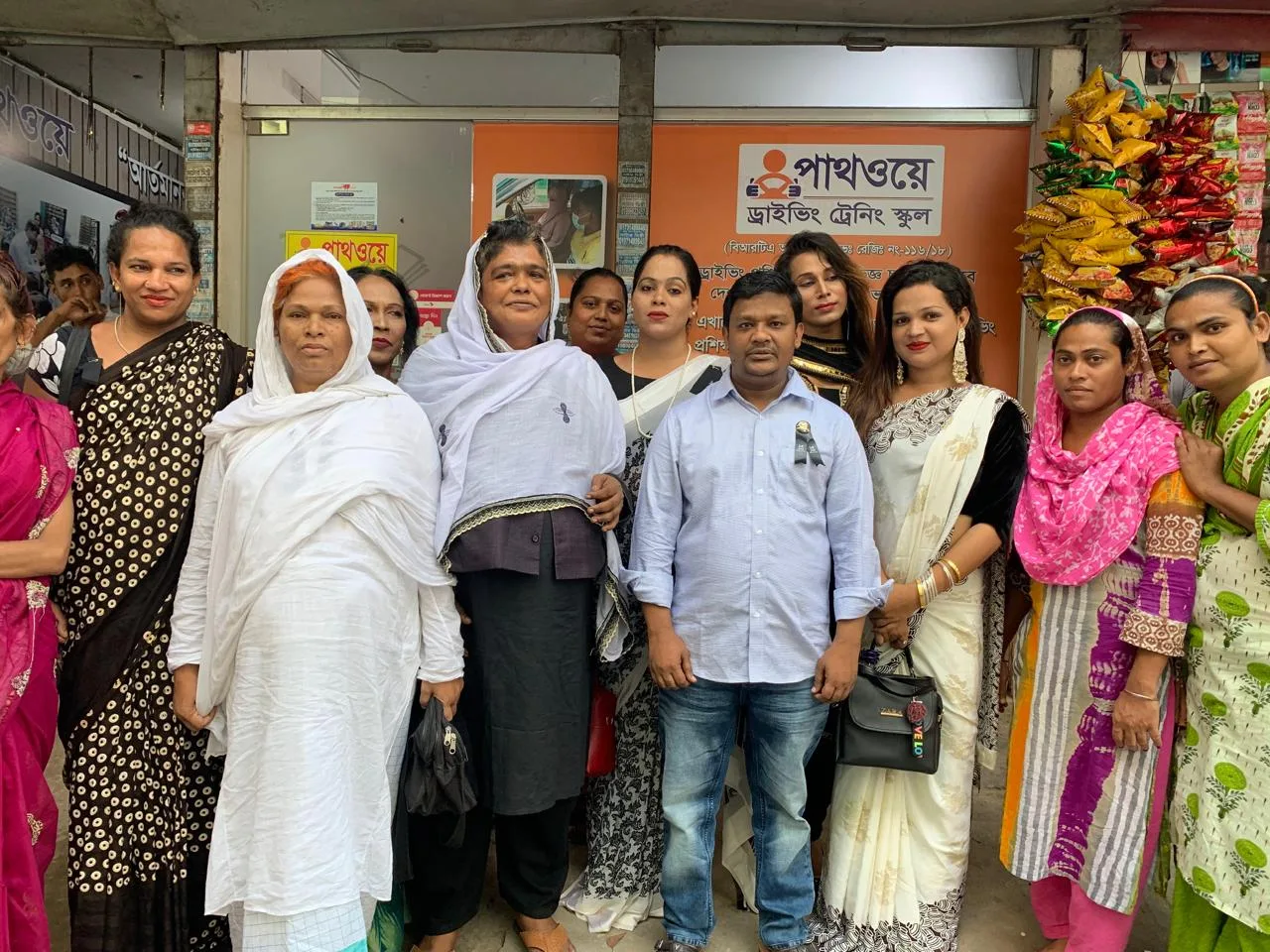
* Arranging driving training for members of the Hijra community.
* Distributing sewing machines to support employment and self-reliance.
* Celebrating Eid festivals with them.
* Encouraging their participation in family and social events.
* Taking community members to a cattle market during Eid-ul-Adha and purchasing a sacrificial cow worth BDT 230,000, so they could share in the joy of Qurbani.
Through these activities, I have received affection, respect, and sincerity from them.
These experiences remain among the most valuable parts of my life.
To me, they are not merely members of a marginalized community. Many have become familiar, trusted, and beloved people in my life.
The Loving Human Beings Behind Their Behavior
Through years of personal interaction, I have come to understand that many members of this community are deeply caring and affectionate.
They know how to accept someone as their own and build meaningful emotional relationships.
At the same time, I have observed that some individuals may become extremely emotional or aggressive when angry.
In certain cases, years of social rejection, humiliation, discrimination, family separation, and the daily struggle for survival may contribute to such behavior.
However, these experiences should never be used to stereotype the entire community.
I have witnessed aspects of their lives that remain largely unknown to the general public.
They Also Dream of Marriage, Family, and Lifelong Love
A common misconception in our society is that Hijra individuals have no desire for marriage, family life, or romantic relationships.
My personal experiences tell a very different story.
I have met individuals who marry, build relationships, and dream of sharing their lives with their husbands.
Some enjoy dressing as brides and taking care of their partners.
They want to prepare meals with their own hands, cook their husbands' favorite dishes, and share both happiness and hardship.
For them, these simple acts of love are an important part of family life.
I have also seen individuals spend their own earnings to fulfill their husbands' wishes.
Some even purchase essential items for their husbands' family members.
They make considerable sacrifices to support the comfort and happiness of the people they love.
Yet their expectations in return are often very simple.
Many have one deeply personal wish:
They do not want to spend the final years of their lives alone.
They long for a loving male companion who will remain beside them throughout their lives.
Someone who will hold their hand through happiness and sorrow.
Someone who will care for them when they become ill.
Someone who will sit beside them in old age, speak kindly, and make them feel loved.
At the end of the day, they too desire a home, a family, and the companionship of someone special.
The Dream of Motherhood: Longing to Hear a Child Say “Mother”
Another deeply emotional aspect of their lives is the desire for motherhood.
I have personally observed that many members of the Hijra community have a strong wish to become mothers.
They dream of adopting children and raising them with the same affection and responsibility as any other parent.
They want to provide education, guide their children toward a better future, and help them become responsible adults.
When their children grow older, they hope to arrange their marriages.
Eventually, they dream of spending their later years surrounded by grandchildren.
The longing to hear a child call them “Mother” can be extraordinarily powerful.
I have witnessed this desire firsthand.
The Heartbreaking Story of a Disciple of Ratna Hijra in Mirpur
I have personally known several members of the Hijra community in Mirpur.
One particularly emotional experience involved a disciple whose Guru Ma was known as Ratna Hijra.
One day, this disciple developed a strong desire to raise a child and hear that child call her “Mother.”
However, no one was willing to give her a child for adoption.
Her longing for motherhood continued to grow.
One day, she encountered a pregnant woman on the street who was experiencing serious mental health difficulties and living in a vulnerable condition.
Moved by the woman's situation, she brought her into her home.
She provided shelter, food, care, and personal assistance.
Deep within her heart, she carried one hope: when the woman gave birth, perhaps she would have the opportunity to raise the child as her own.
Perhaps, one day, she would finally hear the word she had longed for—“Mother.”
For seven long months, she cared for the pregnant woman.
At times, the woman would relieve herself inside the room.
Without hesitation, the Hijra caregiver cleaned everything herself.
She continued caring for the woman with patience, compassion, and dedication.
She also spent a considerable amount of money on her care.
All of this was motivated by one cherished dream: to become a mother in the eyes of a child.
Eventually, the woman gave birth.
Tragically, the baby died shortly after birth.
I can never forget the grief and heartbreaking cries of the Hijra individual who had cared for the woman for seven months.
Through her tears, she expressed the pain of spending seven months caring for someone, waiting with hope, only to lose the opportunity to hear a child call her “Mother.”
The incident affected me deeply.
It taught me that motherhood is not limited to biological childbirth.
Motherhood can also be expressed through love, protection, sacrifice, caregiving, and the willingness to take responsibility for a child's life.
Lata Hijra of Mohipur, Patuakhali: A Child Who Sparked Public Curiosity
Another remarkable story concerns Lata Hijra, a Guru Ma from the Mohipur area of Patuakhali district.
At one point, local residents noticed that Lata had brought a child into the community.
People became curious and began asking questions.
“Lata, where did you get this baby?”
According to the account I learned, Lata replied:
“I gave birth to this child.”
Her statement generated considerable discussion throughout the area.
The matter reportedly attracted the attention of journalists and media organizations.
According to what I learned, reporters repeatedly approached her for interviews.
Eventually, she became exhausted by the constant media attention.
This incident reflects the intense public curiosity surrounding motherhood, child-rearing, and family relationships within the Hijra community.
Lata's statement about the child's birth is presented here as her reported account; it has not been independently verified.
Real-Life Examples of Child-Rearing Within the Hijra Community in Mirpur
In Mirpur, I have encountered several members of the Hijra community who have adopted children or taken responsibility for raising children in their care.
I would like to mention a few individuals whose experiences are particularly meaningful.
1. Rashida Hijra and Anwari Hijra
Rashida Hijra and Anwari Hijra are among the known Guru Mas within the Hijra community in Mirpur.
Many community members maintain social and family-like relationships under their guidance and within their networks.
2. Hira Hijra Mirpur Section 7
Hira Hijra, from Mirpur Section 7, raised three children whom she had taken into her care through adoption.
She supported them as they grew up and arranged their marriages.
Her dedication as a parent and caregiver deserves recognition.
3. Mandira Hijra Mirpur Section 7
Mandira Hijra, also from Mirpur Section 7, adopted and raised a daughter.
She also entered into a marital relationship herself.
4. Farzana Mirpur Section 7
Farzana, who lives in Mirpur Section 7, has taken responsibility for raising a boy.
She is providing for his education at a madrasa.
5. Jonaki Mirpur Section 7
Jonaki, another resident of Mirpur Section 7, is raising a girl under her care.
These examples illustrate the desire for family life, parental responsibility, affection, and commitment to the next generation that exists within the Hijra community.
They remind us that the ability to love and care for a child is not determined by gender identity.
The Hijra Population in Bangladesh and Its Social Structure
Based on information I have encountered and my personal experiences, I have heard estimates suggesting that Bangladesh may have approximately 40,000 to 50,000 members of the Hijra community.
However, this is an informal estimate rather than a verified official figure. Reliable government statistics are necessary to establish the actual population.
The Hijra community has its own social structure and leadership networks in different parts of Bangladesh.
In Dhaka, several individuals are known within these networks.
In Mirpur, they include Rashida Hijra, Anwari Hijra, Rakhi Hijra, Sohag Hijra, and Babu Hijra.
Rakhi Hijra, Sohag Hijra, and Babu Hijra are also associated with the Mirpur Section 2 area.
In Mohammadpur, one of the known community leaders is Guru Ma Ronok Hijra.
In Moghbazar and other parts of Dhaka, individuals known to me include Sajib Hijra, Masuma, Hashi, Shyama, Sarala, Apon, and Nazma.
Through my interactions and personal contacts, I have learned that thousands of Hijra individuals maintain connections with different Guru Mas and community networks across Dhaka.
Each person has a unique story of survival, relationships, hardship, and hope.
The Relationship Between Guru Mas and Disciples: Finding a New Family After Rejection
The Hijra community has a distinctive social and family-like structure.
One of the most important figures in this structure is the “Guru Ma.”
A Guru Ma is generally a senior community member who provides guidance, shelter, protection, and leadership.
Many disciples regard their Guru Ma as a mother figure.
Within the community, relationships are formed through Guru Mas, disciples often called chelas sisters within the network, disciples of disciples, and succeeding generations.
In some groups, there are senior Guru Mas, their disciples, and younger generations who may be regarded as grandchildren within the community hierarchy.
These relationships often function as alternatives to traditional family structures.
Many Hijra individuals experience rejection and discrimination from an early age.
Some become separated from their families.
Some are deprived of parental affection.
Others struggle to find acceptance among relatives and neighbors.
As a result, they may leave their biological families and seek belonging within the Hijra community.
There, one person becomes a mother figure, another becomes a sister, another a child, and someone else a protector.
Through these relationships, they find affection, emotional support, security, and the courage to survive.
Funeral Traditions and Community Bonds After Death
Just as the Hijra community maintains distinctive social relationships during life, community members also play important roles in funeral arrangements.
I have observed that when a member of the community dies, others come forward to perform the necessary duties.
These may include washing the deceased, preparing the body with three pieces of burial cloth, and arranging the funeral and burial.
In many cases, members of the Hijra community themselves take responsibility for the final washing and burial preparations.
For individuals who experienced rejection during their lifetime, their final farewell may be organized by the people who became their chosen family.
This reflects the depth of emotional connection and mutual responsibility within the community.
Why Are They Neglected by Society and the State?
In Bangladesh, Hijra individuals are sometimes treated as a burden on the state, a burden on society, or objects of public hatred.
But I want to ask an important question:
Are members of the Hijra community alone responsible for their circumstances, or do our families, society, and the state also bear responsibility?
When many people encounter a Hijra individual, they react with fear, irritation, or prejudice.
Yet they are human beings just like us.
They experience hunger, pain, illness, affection, hope, and disappointment.
They have dreams, emotions, dignity, and the desire to belong.
Many face discrimination from childhood.
Some grow up without parental affection.
Others are denied family acceptance or are forced to distance themselves from relatives.
Long-term humiliation, rejection, and deprivation can negatively affect emotional well-being.
In some cases, these experiences may contribute to frustration, anger, or aggressive reactions.
However, the behavior of a few individuals should never define an entire community.
Just as we cannot judge a whole family or society by the actions of one person, we should not judge the entire Hijra community by the behavior of a few members.
Control by Guru Mas, Economic Exploitation, and the Vulnerability of Community Members
Although the Hijra community contains relationships based on affection, shelter, and mutual support, I have also encountered accounts of exploitation, control, and economic abuse.
Through my long-term involvement, I have observed that some Guru Mas do not adequately prioritize the welfare of ordinary community members.
Instead, certain individuals may treat their disciples primarily as sources of income.
In some cases, particular neighborhoods, markets, and areas are reportedly transferred between Guru Mas or influential community members in exchange for money.
I have also learned of situations in which control over individual Hijra members is transferred for a specified payment.
Such practices raise serious concerns about human dignity and personal freedom.
Those with financial resources may obtain control over certain areas or groups and send their disciples to collect money.
Disciples may be sent to residential neighborhoods, markets, streets, buses, and other public places.
Some monitor whether new houses have been built or whether a child has recently been born in a household.
They may then visit these homes and demand money.
In certain cases, disputes arise because of rude behavior, intimidation, or attempts to collect money by force.
These incidents contribute to negative public perceptions of the Hijra community.
People become afraid of them, and some develop hostility toward the entire population.
But have we ever considered whether everyone collecting money on the streets is doing so voluntarily?
Some individuals may be trapped within systems of control.
There are allegations that a substantial portion of their earnings is taken by Guru Mas or other controlling figures.
Some do not have full control over the money they earn.
When a person is placed under the control of a Guru Ma through a financial arrangement, they may be expected to follow that leader's instructions.
Disobedience may expose them to threats, punishment, or abuse.
As a result, some individuals may find it difficult to leave these arrangements.
This is not merely an economic issue.
It is a question of human rights, personal freedom, safety, dignity, and social justice.
Housing Crisis: The Struggle to Find a Safe Place to Live
One of the most serious challenges faced by many Hijra individuals is the lack of safe and affordable housing.
Many do not own homes.
Some cannot afford suitable accommodation.
Others encounter landlords who refuse to rent property to them because of their gender identity.
Consequently, several individuals may be forced to share a small room in an informal settlement.
Sometimes many people live together in overcrowded conditions.
There may be little privacy, insufficient ventilation, poor sanitation, and inadequate living facilities.
Some individuals have no reliable place to stay at all.
Living under such conditions makes it extremely difficult to maintain a safe, healthy, and dignified life.
Healthcare Challenges and Lack of Safe Drinking Water
Alongside housing difficulties, many members of the community face serious healthcare challenges.
Some cannot access regular medical treatment.
Others hesitate to visit hospitals because they fear discrimination or humiliation.
Many lack healthy living environments.
Access to clean drinking water, sanitation, and hygienic facilities may be inadequate.
Financial hardship also affects food security.
Some individuals struggle to afford regular meals.
Others survive under conditions of severe economic uncertainty.
When someone else controls their earnings, meeting even basic daily needs can become extremely difficult.
Exclusion from Public Toilets and Sanitation Facilities
Another painful reality concerns access to public toilets.
In many public places, Hijra individuals encounter difficulties using sanitation facilities.
Some are prevented from using men's toilets.
Others are denied entry to women's toilets.
As a result, they may experience humiliation, discomfort, and hardship while trying to meet a basic physical need.
When a person cannot safely and respectfully use a public toilet, it reveals how deeply social exclusion can affect everyday life.
Access to sanitation is a basic human necessity, not a privilege.
Are They Really a Burden on the State, or an Overlooked Human Resource?
Based on my years of experience, I firmly believe that members of the Hijra community can make meaningful contributions to national development when they receive appropriate education, training, employment opportunities, and social protection.
Many are hardworking, responsible, capable, and eager to become financially independent.
With proper opportunities, they can learn driving, tailoring, entrepreneurship, and many other vocational skills.
They can operate businesses and work successfully in different professions.
I have personally been involved in driving training initiatives and sewing machine distribution programs for community members.
These experiences have strengthened my belief that practical employment opportunities can transform lives.
However, training alone is not enough.
Training must be connected to actual employment.
Society must become more accepting.
Safe housing, healthcare, clean drinking water, and dignified living conditions must be ensured.
Economic exploitation, coercive control, and abuse must also be addressed.
Relationships between Guru Mas and disciples should be based on affection, protection, and cooperation—not exploitation or violence.
Meaningful change requires cooperation among the government, families, local representatives, public institutions, civil society organizations, and concerned citizens.
My Expectations from the Government
I believe that the government should undertake more effective, practical, and inclusive initiatives to improve the living conditions of the Hijra community.
The following measures deserve particular attention:
1. Housing and Rehabilitation
Provide safe, affordable, and hygienic housing and rehabilitation facilities.
2. Vocational and Technical Training
Expand access to driving instruction, tailoring, small-business development, and other income-generating skills.
3. Employment Opportunities
Create meaningful employment and self-employment opportunities for trained community members.
4. Healthcare Services
Ensure accessible, respectful, and discrimination-free healthcare, including health education and necessary medical treatment.
5. Safe Drinking Water and Sanitation
Improve access to clean drinking water and safe, usable public sanitation facilities.
6. Social Security
Strengthen social protection for elderly, vulnerable, and economically disadvantaged members of the community.
7. Protection Against Exploitation and Abuse
Take appropriate legal action against coercive control, forced money collection, trafficking-like practices, and other forms of abuse.
8. Public Awareness and Social Acceptance
Conduct awareness programs to reduce prejudice, discrimination, and hostility within families and communities.
9. Education and Family Reconciliation
Expand educational opportunities and support safe, voluntary family reconciliation wherever appropriate.
10. Equal Rights and Human Dignity
Ensure that Hijra individuals can enjoy the same fundamental rights, safety, freedom, and dignity as other citizens.
What This Long Journey Has Taught Me
Since 2015, I have heard countless stories from members of this community.
I have witnessed their laughter, tears, anger, affection, and disappointment.
I have seen the devotion of a partner toward her husband.
I have witnessed the longing of someone who desperately wanted to become a mother.
I have observed the affection of Guru Mas toward their disciples.
I have also encountered accounts of exploitation, abuse of authority, and injustice.
I have seen how someone separated from their biological family can find a mother, sister, child, or loved one among people who were once strangers.
I have seen a person care for a vulnerable pregnant woman for seven months, hoping that one day a child would call her “Mother.”
I have known someone who raised three children and arranged their marriages.
I have met someone supporting an adopted son's education at a madrasa.
I have known another individual raising a girl with the affection of a parent.
At the same time, I have seen people living in overcrowded rooms in informal settlements.
I have encountered individuals struggling to afford food.
I have learned about people who lack control over their own earnings.
I have heard about the humiliation faced by those who cannot access public toilets.
All these experiences have taught me one important lesson:
To understand a person's true identity, we must not judge them from a distance. We must approach them, listen to their stories, and try to understand their suffering.
Among the people we fear or avoid, there may be someone who has spent an entire lifetime waiting to hear a child call her “Mother.”
There may be someone willing to sacrifice all her earnings to bring happiness to a beloved partner.
There may be a devoted caregiver who dreams of raising a child into a responsible adult.
They have wishes.
They have dreams.
They have love.
They have self-respect.
And they have the right to live with dignity.
Final Words: Offer Respect, Love, and Opportunity Not Hatred
The third gender community is neither unnecessary nor separate from our society.
They are citizens of this country.
They are part of our communities.
They are someone's children, siblings, relatives, and loved ones.
Rejecting people because of their gender identity, separating them from their families, or treating them with hatred cannot be considered the behavior of a compassionate and civilized society.
If an individual commits an offense, that person should be held accountable under the law.
But the wrongdoing of a few must never become a justification for condemning an entire community.
Similarly, anyone who exploits vulnerable individuals, forces them into financial arrangements, or takes away their earnings should also be held accountable.
I believe that meaningful government support, positive social attitudes, and practical employment opportunities can improve the lives of this community.
People should have opportunities to move away from dependence on begging or coercive money collection and enter dignified professions.
They should have access to education and skills.
They should have safe places to live.
They should receive healthcare when they are ill.
Their dreams of love, companionship, and family life should be respected.
Above all, they must be accepted as human beings with equal dignity.
The third gender community is not a burden on the state. With education, vocational training, employment, safety, and social recognition, its members can make important contributions to the development of Bangladesh.
I dream of a society where no third gender individual is forced to leave home because of their identity.
Where no parent considers their child a source of shame.
Where no one must endure humiliation simply to survive.
Where no Hijra individual has to cry helplessly because the dream of hearing a child say “Mother” remains unfulfilled.
Where no one has to spend the final years of life suffering from loneliness and the absence of a loving companion.
We must change our attitudes. We must replace hatred with humanity, neglect with compassion, and exclusion with opportunity.
Because they have hearts.
They have lives.
They have the right to love and be loved.
They are not asking for pity. They are asking for respect, recognition, equal rights, and the opportunity to live with dignity.
Written from my personal experiences, social initiatives, direct interactions, and observations of the Hijra community since 2015.